How one river is keeping Malaysia’s rarest turtle alive
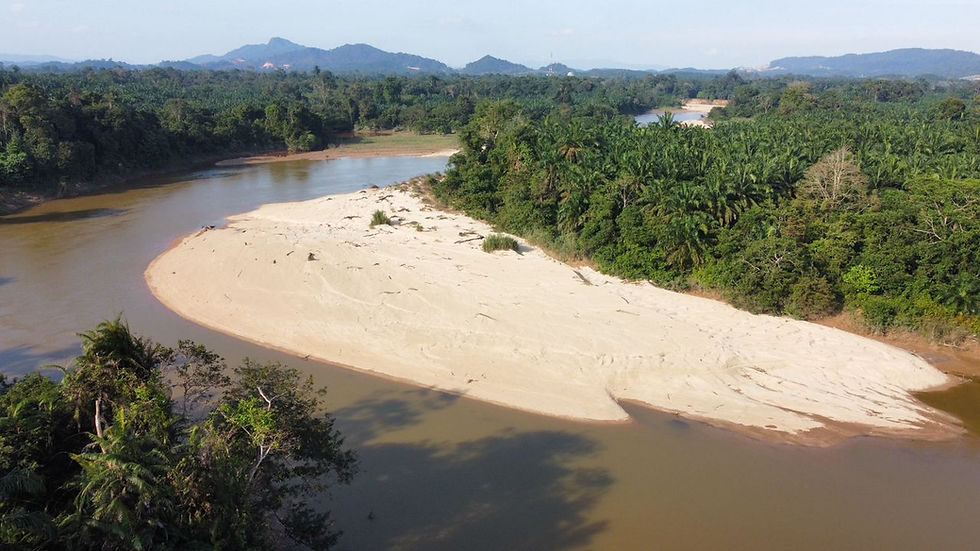
By night during the nesting season, villagers patrol the sandbanks of the Kemaman River along Malaysia’s east coast state of Terengganu, protecting one of the world’s rarest freshwater terrapins. René Laing finds out more.
Southern river terrapin facts:Mid-January to Mid-March: Southern river terrapin nesting season.Over 7 000: The number of terrapins released into the wild since the start of the project.Around 250: the remaining southern river terrapins in the Kemaman River in Malaysia. 3 Months: The incubation time for eggs Critically Endangered: The conservation status of southern river terrapins, according to the International Union for Conservation of Nature.
Global geographic range: Malaysia and Cambodia
By 22:00, Terrapin Guardians from Kampung Pasir Gajah village fan out across a chain of sandbanks, scanning for tracks left by one of the world’s rarest freshwater terrapins. When a female emerges to lay her eggs, the team waits until she has finished before moving in. They weigh her, measure her shell, implant a microchip, and carefully collect every egg from the nest.
By dawn, the future of an entire species may already be on its way to a hatchery, a stark reversal of past practices. The urgency is justified.
The southern river terrapin (Batagur affinis) is one of Asia’s most endangered freshwater terrapins. Once widespread, its numbers collapsed after decades of egg harvesting. Habitat destruction from sand mining and entanglement in discarded fishing gear further compounded the decline, leaving fragile populations struggling to survive in a handful of isolated rivers.
Filling the freshwater blind spot
In 2010, following initial reports from residents, the Turtle Conservation Society of Malaysia (TCS) confirmed terrapins in the Kemaman River. With little enforcement and egg collection deeply embedded in local culture, the risk of collapse was imminent. TCS launched a conservation project built on the understanding that local involvement was essential.
“When we started in 2011, sea turtles received almost all the conservation attention,” explains Dr Chen Pelf Nyok, co-founder and executive director of TCS. “Freshwater terrapins were largely ignored, even though their situation was just as bad, if not worse.”
Instead of alienating communities that had long relied on terrapin eggs, TCS partnered with them. Former egg collectors became guardians, using their knowledge of river conditions, nesting behaviour, and seasonal patterns to protect nests instead of emptying them.
The approach proved effective. Over the past 15 years, the programme collected more than 11 000 eggs and released over 7 000 young terrapins into the Kemaman River, stabilising what may now be the species’ largest remaining wild population.
Over the following years, however, participation has eroded. Today, only Kampung Pasir Gajah remains active in the programme. Other villages dropped out after sand mining destroyed nesting sites or key community leaders became unable to continue. The loss of even a single sandbank can be devastating as terrapins rely on specific nesting sites, and alternatives are scarce.
Today, the Kemaman River is the only known river in Malaysia where a substantial number of southern river terrapins still nest naturally. In many other locations, the species has largely disappeared from the wild, leaving conservation centres to rely almost entirely on captive breeding.
Life as a Terrapin Guardian
Nesting season means long nights and little sleep from guardians. Most guardians hold regular jobs alongside their patrol duties. Teams patrol up to six sandbanks per night, often camping through heavy rain, aware that more than 80% of eggs often come from a single site. Once collected, eggs face an uncertain future.
Eggs are incubated at a hatchery, but hatching success is highly variable. In some years hatching rates reach 78%; in others, they fall as low as 11%.
“We have no idea why,” Nyok explains. “Stress, rainfall, fungal infections, how the eggs are transferred, or even whether the female mated successfully could all influence it.”
For the survivors, hatchlings are raised for between five and 18 months before release. After release, mortality remains high, reaching up to 50%. Smaller juveniles are particularly vulnerable to predation by fish and monitor lizards. Releasing larger individuals improves survival odds for this long-lived species, which takes around 20 years to reach maturity. However, the capacity to keep hatchlings also influences the release rate.
A species running out of time
Releasing a terrapin back into the river represents just the first hurdle. Post-release monitoring is costly but critical, with teams patrolling the river to track survival and remove ghost fishing gear that continues to kill wildlife.
Many terrapins are injured by hooks or trapped in nets and require rehabilitation. For a species with an estimated 250 adult females in the Kemaman River, every loss matters critically for a species. Females lay an average of 25–35 eggs per clutch but only begin breeding after about two decades. Every lost adult represents decades of lost reproductive potential. Yet guardians remain cautiously hopeful.
The project’s success, Nyok explains, will only become evident with time. “The first real indicator will be when females we released years ago return to nest, but that only happens after about 20 years.” Encouragingly, teams are encountering fewer unmarked females during recapture surveys, suggesting most surviving adults are now part of the monitoring programme. Ongoing scientific research will also determine the correct period of time to raise hatchlings before release.
Beyond the Kemaman River, there are encouraging developments. In early 2025, nesting was recorded at a previously unknown site in a neighbouring state, suggesting the species may still have surprises left.
The Kemaman River is proof of what is possible when conservation is rooted in community. The southern river terrapin still has a chance to reclaim its place in a river that supports its survival.
We published this article in the fifth edition of ThisWildEarth. Read our other publications here.


ThisWildEarth


Comments